
Accredited investors
Transforming drug manufacturing
rBIO has developed a proprietary bacteria-based peptide manufacturing process that increases production output and improves the economics of essential peptide drugs.
Corporate profile
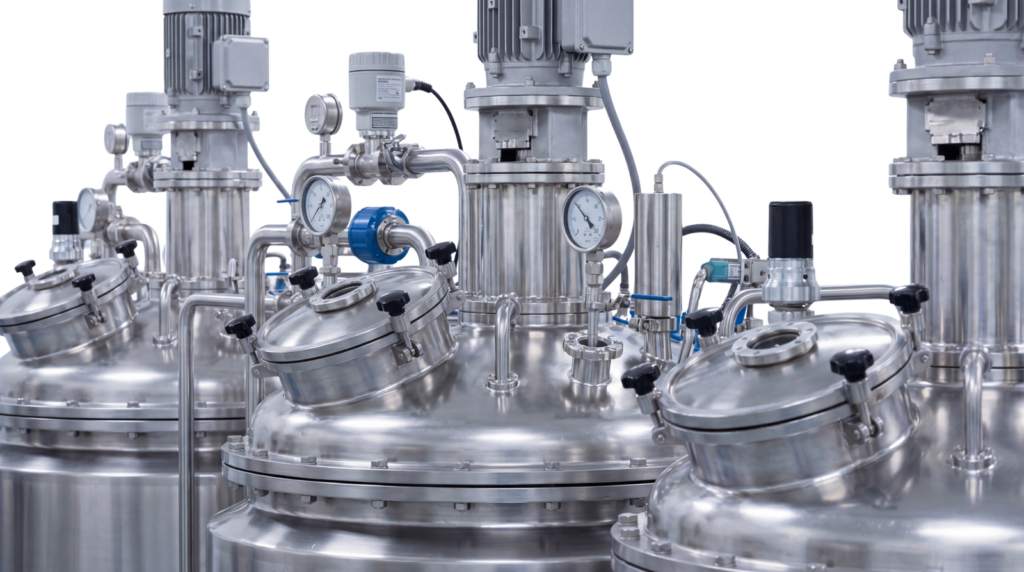
rBIO is an early-stage biotechnology company focused on developing a platform to address the economics and access to essential peptide drugs. We are transforming peptide drug manufacturing.
The company is focused first on insulin, with a licensing-first model for qualified regional and strategic partners.
rBIO in a nutshell:
- Peptide manufacturing platform
- Proprietary process that increases output
- Licensing model for regional and global partners
- Experienced leadership and investor-aligned commercialization plan
Business model
The company has developed a proprietary manufacturing process that increases output, lowers the cost of peptide production, and creates a repeatable licensing model for multiple peptides.
The problem we address:
Essential peptide drugs including insulin, with complex manufacturing practice, margin pressure and supply vulnerability continues to drive up cost.
For manufacturers and regional partners, a more efficient insulin production process improves commercial economics while supporting broader access.
Investor relevance
- Large essential peptide drug market
- Persistent manufacturing inefficiency
- Supply pressure as major manufacturers shift focus
- Need for qualified regional production capacity
- Potential for licensing-driven scale
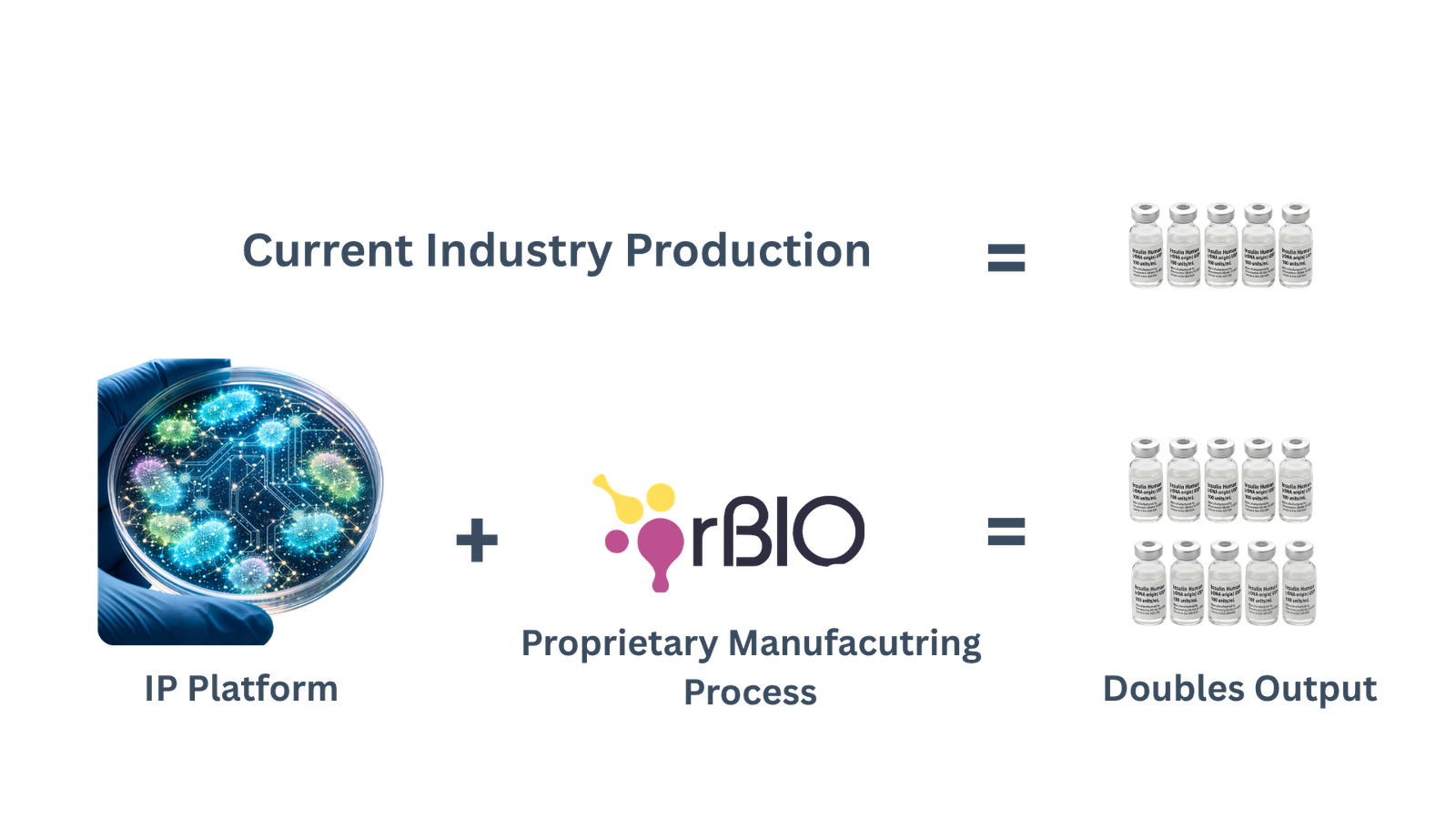
rBIO’s platform doubles the rate of insulin production compared with current industry production.
What rBIO has built
- Proprietary insulin manufacturing process
- Process IP and technical know-how
- Bacteria-based production approach
- Scale-up path from 20L pilot work to 1,000L production
- Licensing model for qualified manufacturing partners
Our secret sauce
Technical differentiation
What makes rBIO different.
The platform combines a bacteria-based production system, proprietary operating knowledge and a transfer-ready licensing model designed to improve manufacturing and partner economics.
| Differentiator | What it means | Investor relevance |
|---|---|---|
| Bacteria-based production | A bacterial production process rather than more complex conventional methods. | Simplifies production economics and supports higher output. |
| Proprietary process know-how | Process design, manufacturing learning, scale-up methods and operating knowledge. | Creates a defensible operating advantage. |
| Increased output | Greater insulin production output compared with current industry methods. | Improves manufacturing and licensee economics. |
| Scale-up path | Progression from completed 20L pilot work toward the 1,000L milestone. | Provides a defined technical milestone toward licensing. |
| Licensing-ready model | Process transfer to qualified manufacturing partners in priority markets. | Supports capital-efficient commercialization. |
| Peptide expansion | Insulin is the first application, with additional peptide potential. | Extends platform value beyond the first license. |
World-class team
Scientific, operational, financial and investor experience.

CEO / Co-founder
Dr. Deen Bakthavatsalam
More than two decades building and commercializing biotechnology innovations across product development, manufacturing and strategic partnerships.
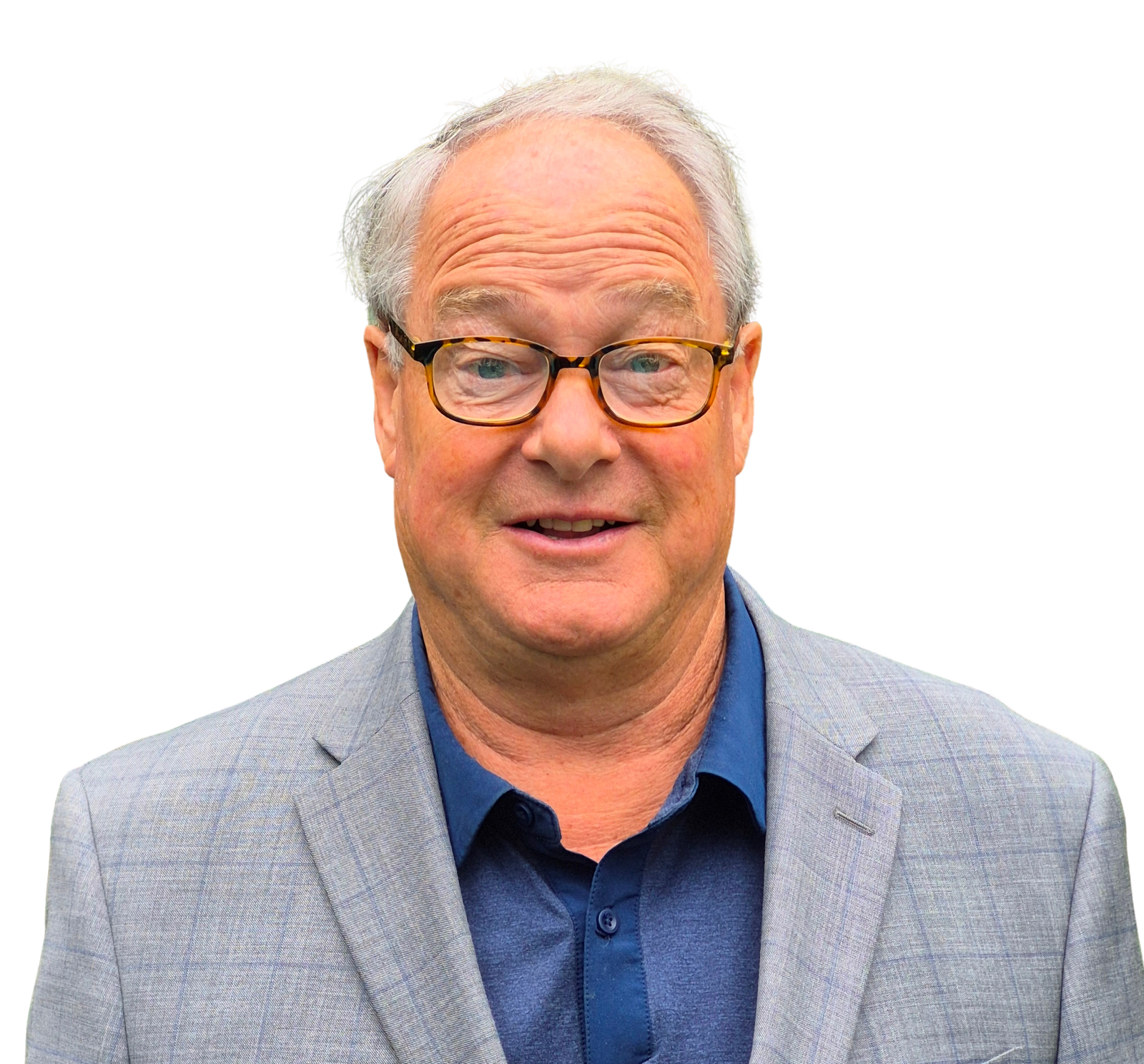
Executive Chairman
Stuart Douglass
Life-sciences investor and company builder providing strategic guidance, governance and long-term shareholder perspective.
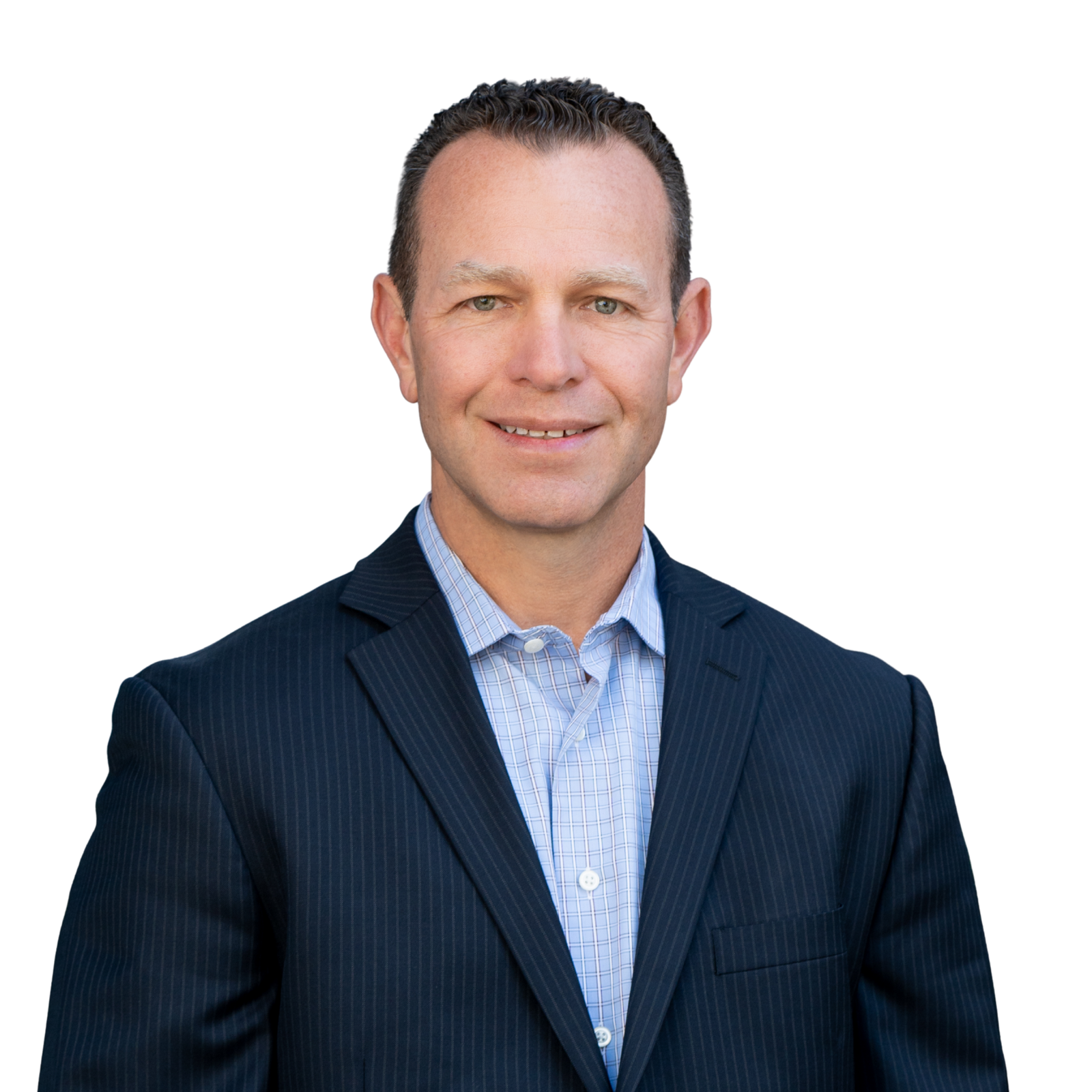
CFO
Shawn Swaney
Financial strategy, fundraising, investor relations and disciplined capital planning for high-growth companies.

Board Member
Dr. Judith Shizuru
Stanford physician, biotechnology founder, entrepreneur and investor with company-building and fundraising experience.

Co-founder
Cameron Owen
Entrepreneurial vision, strategic partnerships, business development and commercial deal-making.
Market opportunity
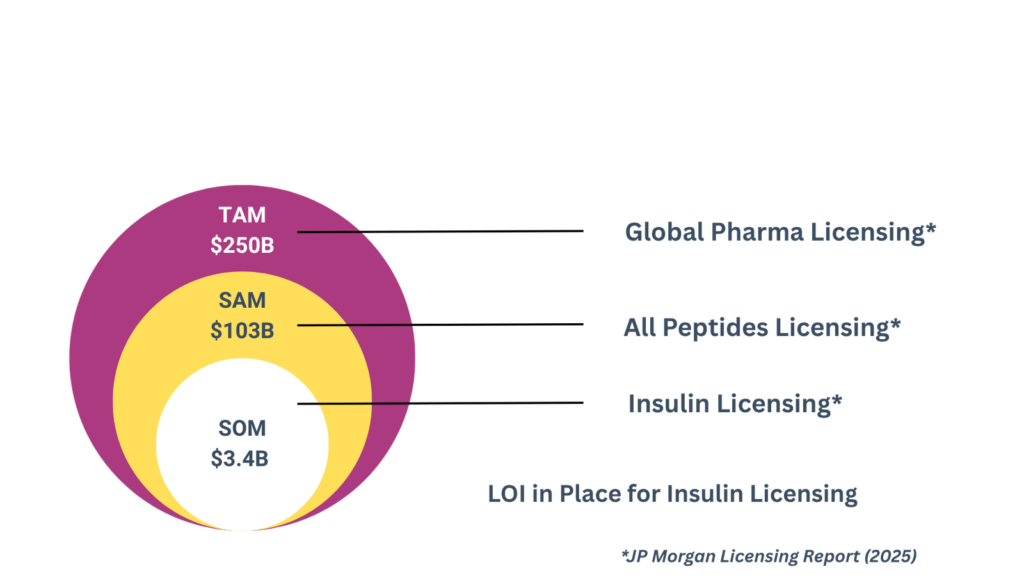
Large licensing opportunity, insulin-first entry point.
The company licenses insulin first, expands by geography and partner category, then extends the platform to additional peptide drugs.
A letter of intent is in place for the first insulin licensing deal.
$250B*
Global licensing market referenced in current investor materials.
Competitive position
Focused where manufacturing economics and licensing meet.
Unlike broad service providers or generalized peptide-platform startups, rBIO combines an insulin focus, licensing model, process know-how and expansion potential.
| Company type | Insulin focus | Licensing model | Know-how | Multiple peptides |
|---|---|---|---|---|
| rBIO | High | High | High | High |
| Contract research organizations | Low | Service-led | Moderate | High |
| General peptide startups | Low | Emerging | Varies | Emerging |
Customer and licensee targets
Qualified partners with a reason to improve production economics.
rBIO evaluates potential licensees by insulin focus, licensing receptivity, need for process know-how, manufacturing capability, market access and margin pressure.
| Customer type | Insulin fit | Licensing fit | Need for know-how | Margin-pressure fit |
|---|---|---|---|---|
| Biosimilar players | Strong | Strong | Lower | Strong |
| Traditional pharma | Strong | Lower | Moderate | Moderate |
| CDMOs and contract manufacturers | Lower | Strong | Strong | Strong |
Priority markets with practical licensing paths.
rBIO prioritizes markets where insulin demand, partner availability, manufacturing need, market access and existing relationships support commercialization.
Mexico and Latin America
Regional demand, partner access and manufacturing economics create an initial licensing opportunity.
United States and India
Established insulin demand and strategic relationships support selected partnership opportunities.
Middle East and Europe
Regional manufacturers and distributors offer additional paths for insulin and peptide expansion.
Go-to-market strategy
Commercialized through licensing.
rBIO works with qualified manufacturers, CDMOs, distributors, fill-finish owners and strategic pharmaceutical organizations.
Near-term Go-to-Market
- License insulin to drug manufacturers
- Manufacture insulin through India JV
- Sell insulin through regional distribution channels
- Expand into pharma, biotech and specialty peptide markets
Sustainable barriers
Protected by process expertise, speed and platform expansion.
Process expertise
Proprietary manufacturing learning and transfer-ready operating knowledge.
Development lead
A three-year head start and insulin-first execution focus.
Platform reach
Asset-light licensing, active partner discussions and expansion across multiple peptides.
Financials and financing roadmap
Funding the path from scale-up to platform revenue.
A $5.5 million seed round funds scale-up and license readiness. A planned $18 million Series A supports licensee expansion, broader commercialization and platform growth.
Complete 1,000L scale-up
Advance commercial-scale process development and production readiness.
Prepare for licensing
Complete the manufacturing package and advance the licensee pipeline.
Expand the platform
Extend the process into additional peptide markets.
| Use of funds | Allocation | Purpose |
|---|---|---|
| Scale-up | 55% | Complete commercial-scale process development and production readiness. |
| Business development and licensing | 36% | Build the licensee pipeline, advance partner discussions and support market entry. |
| Operations and team | 9% | Fund personnel and operating infrastructure required for execution. |
Licensee economics
Long-term platform relationships drive attractive return potential.
The first-licensee model projects $30 million in lifetime value against an estimated $3.5 million acquisition and development investment.
| Metric | Current model |
|---|---|
| Customer lifetime value | $30M |
| Customer acquisition cost | $3.5M |
| Modeled LTV/CAC | 8.6x |
Financial model and milestones
Asset-light licensing supports scalable operating leverage.
| Financial milestone | Current projection |
|---|---|
| Revenue begins | Q5 |
| Operating profit turns positive | Q7 |
| Net cash turns positive | Q15 |
Risk mitigation
Defined risks. Defined responses.
| Risk | Current position | Mitigation |
|---|---|---|
| Process scale-up | 20L pilot work completed | Advance through 1,000L optimization using a milestone-based program. |
| CMC readiness | Exploratory animal testing completed | Complete the process-development and manufacturing package required for transfer. |
| Capital | Licensing-first model | Deploy capital against defined technical and commercial milestones. |
| Licensee adoption | Targeted regional strategy | Focus on partners with insulin demand, infrastructure and margin pressure. |
| Commercial execution | Experienced leadership and governance | Coordinate scale-up, licensing and investor strategy through an integrated plan. |
Strategic exit paths
Platform value for manufacturers, CDMOs and pharma partners.
The licensing model creates multiple strategic paths, including acquisition, platform partnership and regional commercialization agreements.
| Strategic category | Industry need | rBIO strategic value |
|---|---|---|
| Biologics CDMOs | Expanded peptide-manufacturing capability | Adds an insulin-focused process and licensing platform. |
| Pharma services companies | Broader infrastructure and technical services | Adds proprietary know-how and process-transfer capability. |
| Strategic pharma | Improved economics and supply flexibility | Supports lower-cost production and regional licensing. |
| Biosimilar manufacturers | Insulin capability and margin improvement | Provides access to a higher-output process. |
| Regional manufacturers | Local production and market access | Creates a country- or region-specific licensing path. |
Three things to remember
Investment thesis summary.
01
Manufacturing complexity drives cost
Insulin remains essential, but production complexity creates cost, margin and supply pressure.
02
rBIO improves production output
The proprietary process is designed to increase insulin production output.
03
Higher output improves economics
Increased output can reduce unit cost, improve licensee margins and support broader access.
Investor FAQ
Key information for accredited investors.
What does rBIO do?
rBIO has developed a proprietary insulin manufacturing process and licensing platform designed to increase production output.
Why insulin first?
Insulin is a large, essential category with persistent manufacturing-cost, supply and margin pressure.
What makes the process different?
A bacteria-based production approach and proprietary know-how improve output and support transfer to qualified partners.
What stage has rBIO reached?
20L pilot work and exploratory animal testing are complete. The next milestone is 1,000L scale-up.
What is the business model?
License the process and operating know-how to qualified manufacturing and commercialization partners.
Who are the target licensees?
Biosimilar manufacturers, pharma companies, CDMOs, regional manufacturers, distributors and fill-finish owners.
Which markets are targeted first?
Initial beachhead planning prioritizes Mexico, the United States and selected regional partner markets.
How does rBIO generate revenue?
Through regional and strategic licensing agreements.
What protects the position?
Process expertise, a development lead, insulin-specific experience, an asset-light model and peptide expansion potential.
What are the next milestones?
Complete 1,000L scale-up, finalize the license-ready package, expand the partner pipeline and execute regional licenses.
What is the funding plan?
A $5.5 million seed round followed by a planned $18 million Series A.
How will seed funding be used?
$3.0 million for scale-up, $2.0 million for business development and licensing, and $0.5 million for operations and team.
What are the principal risks?
Process scale-up, CMC readiness, capital requirements, licensee adoption and commercial execution.
Investor relations
Start a confidential conversation.
rBIO welcomes inquiries from accredited investors, institutional investors and strategic funding partners.
Contact the rBIO team to request current investor materials or discuss the company’s technology, licensing strategy and financing plan.